
The problem:
Your company's information is scattered.
CRM, internal folders, public portals, records, industry websites, applications... Too much time accessing, searching, cross-referencing, coordinating...

The solution:
Consolidate everything within your AI agent's chat.
With various internal and external sources coordinated by a single intelligence,
Your agent knows which source to consult for each task,
it knows which information to prioritize, combine, and analyze with AI.
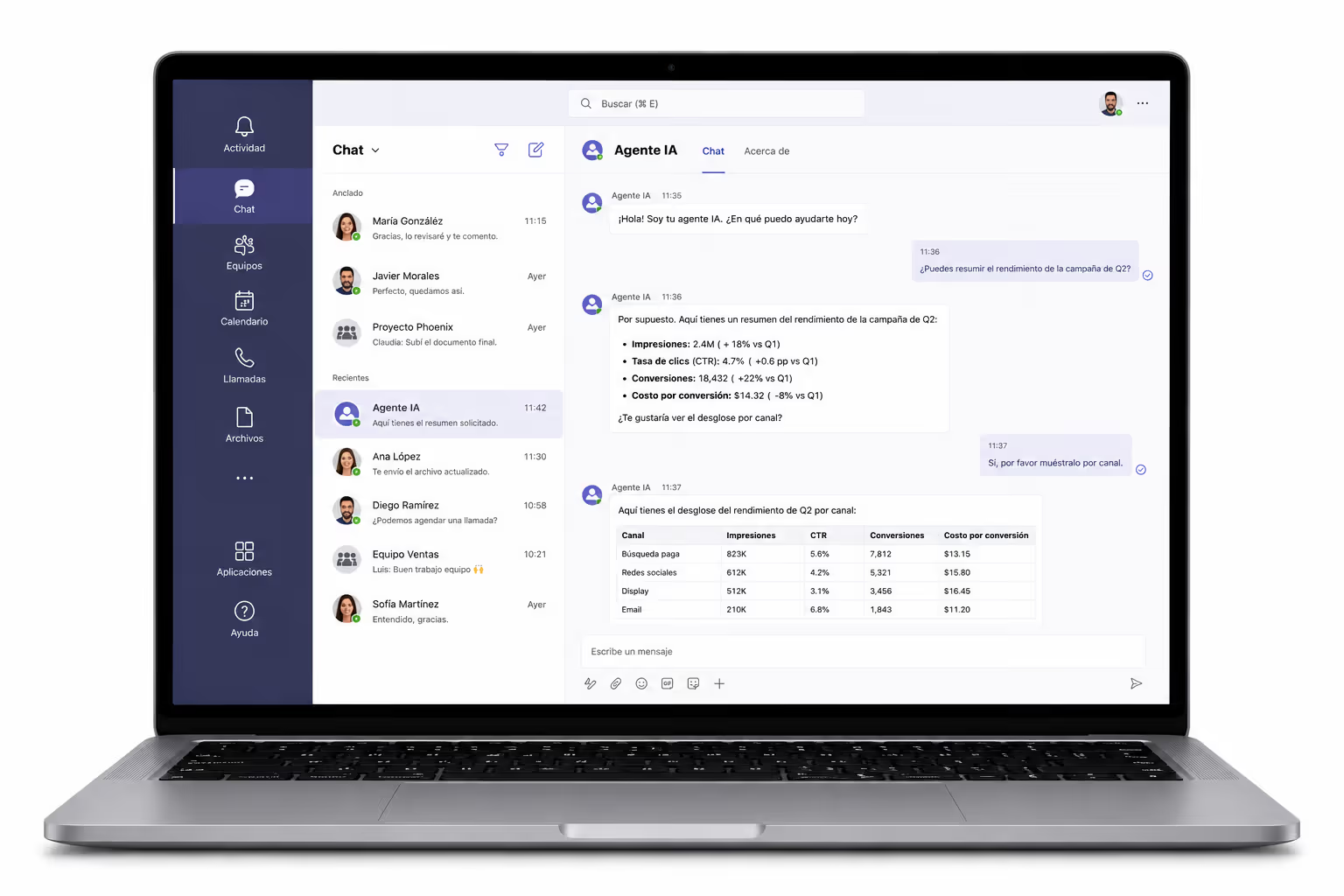
Your AI agent already has the context and connections. It will know which sources to consult and which tasks to execute.
Your agent provides an integrated view so you can see the forest, not just the trees.
Your agent sees the forest, not just the trees
Sometimes what's important isn't in the documents: it's between them
- Have you ever discovered that a client hired a competitor for a service you were already providing them on another project?
- Have you ever discovered too late that different investments shared the same risk?
- Have you ever drafted a proposal, forgetting you already had a similar one?
The problem:
- Cross-selling and upselling opportunities
- Risks common to different projects that invalidate diversification
- Hours lost rewriting proposals you could have copied
...and much more
The solution
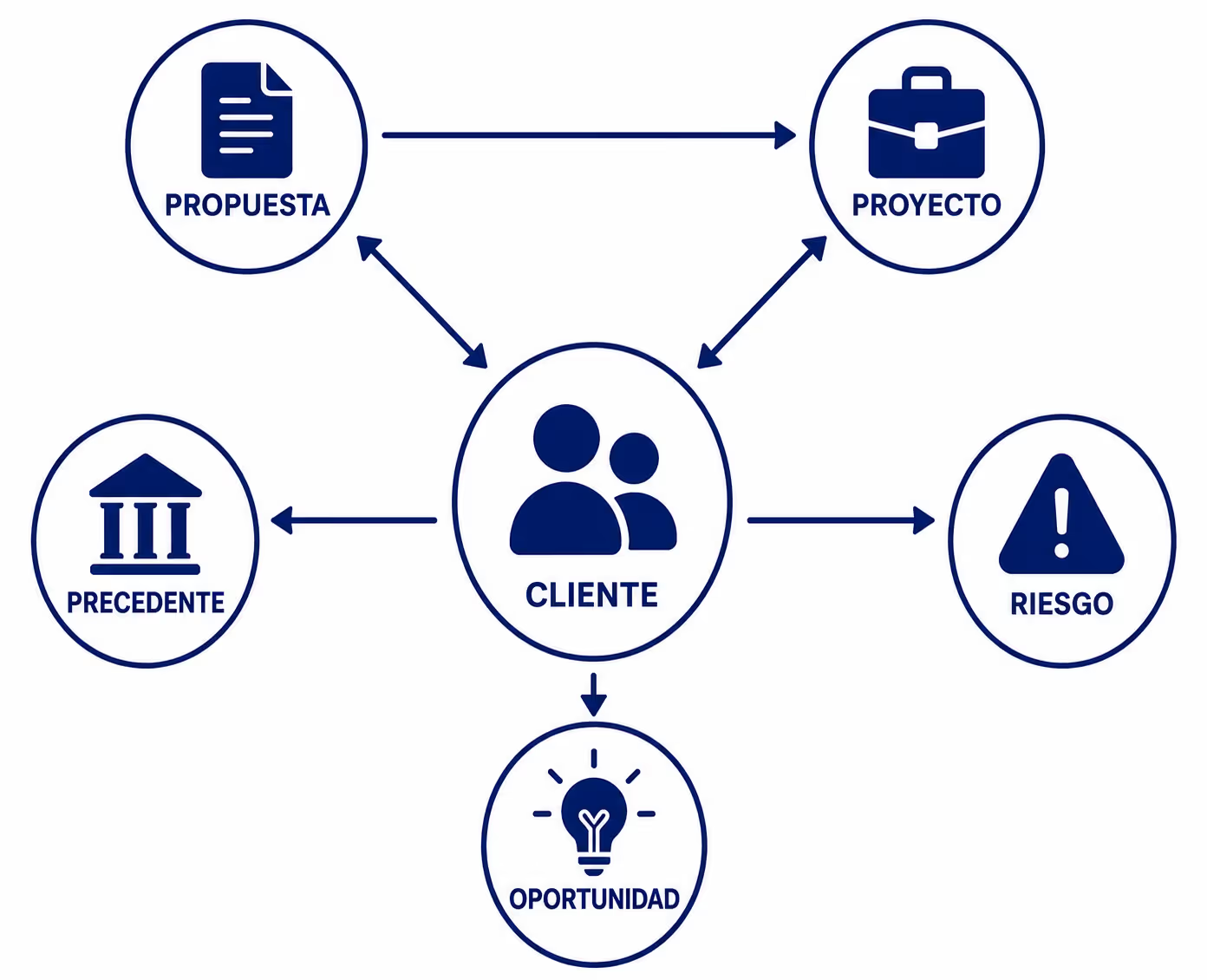
We integrate a relational graph into your agent that acts like Google Maps for your business, a neural map that connects data and avoids blind spots. An address book tells you which clients you have. LinkedIn tells you who knows whom, who worked with whom, and what path connects two people.
- The agent extracts key data from your document base and connects it
- Builds a GPS navigator for the connections between your company's data
- Contextualizes each answer within the relational map
- Identifies patterns, synergies, and common denominators
- The agent extracts key data from your document base and connects it
- Builds a GPS navigator for the connections between your company's data
- Contextualizes each answer within the relational map
- Identifies patterns, synergies, and common denominators